
Bamboo flooring degrades faster from neglect and wrong cleaning habits than from foot traffic alone. The finish — whether aluminum oxide, UV-cured lacquer, or oil — forms the primary protective barrier between the bamboo fiber and everything that contacts it daily. Once that barrier weakens, moisture, grit, and UV exposure accelerate structural damage in ways that cleaning alone cannot reverse. Maintenance is not a single task but a layered system of daily habits, environmental controls, and periodic interventions calibrated to your floor’s construction type and finish.
Why Bamboo Flooring Requires a Different Maintenance Approach Than Hardwood
Bamboo is a grass-based material, not a timber species, which means its cellular structure responds to moisture and humidity changes with greater sensitivity than most hardwoods. Bamboo’s relationship with moisture is not simply about surface wetness — relative humidity fluctuations above 60% or below 35% cause the planks to expand and contract at the fiber level, which places stress on the finish, the joints, and the adhesive or locking system beneath.
Horizontal and vertical bamboo constructions laminate compressed culm strips and carry a moderate density, typically measuring between 1,200 and 1,800 lbf on the Janka hardness scale. Strand-woven bamboo, manufactured by compressing shredded bamboo fibers under heat and resin, reaches Janka ratings between 2,500 and 3,000 lbf, making it significantly more resistant to denting and surface abrasion. These differences in density directly affect how aggressively a floor can be cleaned, how often it needs refinishing, and which products are safe to use on the surface finish.
Engineered bamboo — a thin bamboo veneer bonded to a plywood or HDF core — adds another variable: veneer thickness determines whether the floor can be sanded at all. Veneers thinner than 2mm cannot withstand sanding without exposing the substrate layer, which limits long-term maintenance options.
The Daily Cleaning Habit That Prevents Finish Degradation
Abrasive grit tracked in from outdoor footwear causes more finish damage than any single cleaning event. A single grain of sand carries dozens of sharp edges; under shoe pressure, it acts as a micro-abrasive against the polyurethane or lacquer finish. A soft-bristled broom or a microfiber dust mop used daily along the grain direction removes these particles before they become embedded or dragged across the surface.
Vacuum cleaners are acceptable provided the unit has a hardwood or bare-floor setting that disengages the beater bar. A rotating brush head contacts the finish at high speed and introduces linear scratching patterns across the grain, which degrade the visual clarity of the finish over time.
Doormats positioned at every exterior entry point reduce the volume of grit reaching the floor by trapping moisture and particles at the transition zone. Mats with a natural rubber or felt backing are safe for use on bamboo; latex and solid rubber backings trap moisture beneath the mat, creating a localized high-humidity zone that causes discoloration and finish softening in the area directly below.
How to Wet-Clean Bamboo Flooring Without Causing Water Damage
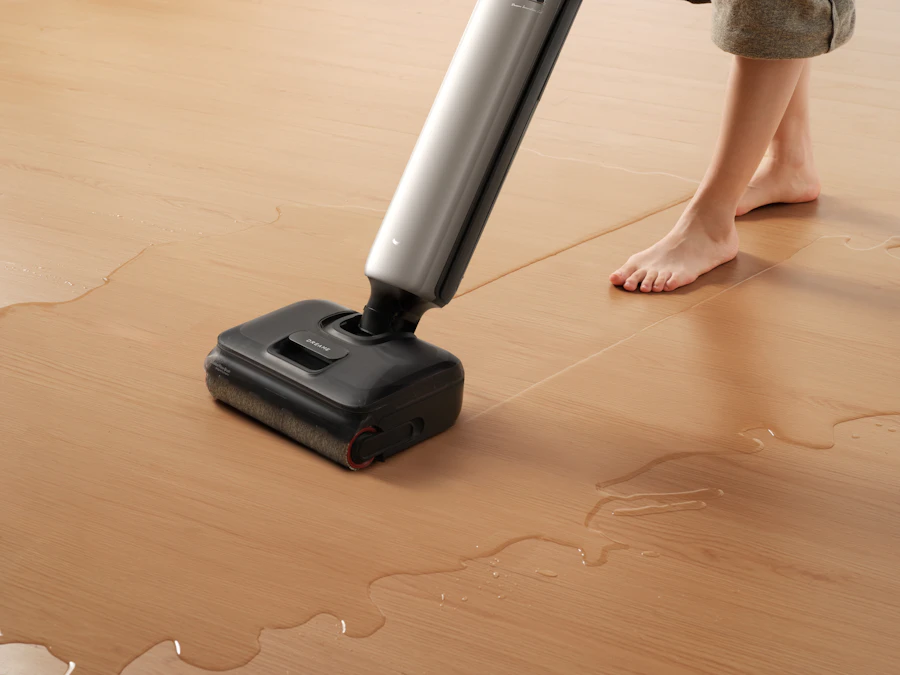
Water is the single most consistently misapplied element in bamboo floor cleaning. Standing water penetrates through micro-gaps in the finish, between planks, and into the endgrain, where bamboo absorbs moisture rapidly. A mop that is visibly wet transfers enough water to cause planks to swell at the edges — a condition known as cupping — within a single cleaning session if the excess water is not removed immediately.
The correct method uses a microfiber flat mop wrung to near-dryness. When pressed flat against the palm, the mop head should feel barely damp rather than cold and wet. Clean in sections of approximately 10 square feet, drying each section with a dry microfiber pad before moving to the next. This prevents water from sitting on the surface for longer than 30 seconds.
pH-neutral cleaners formulated for sealed wood or bamboo floors are the appropriate product category. Cleaners with a pH above 9 or below 6 break down polyurethane and lacquer finishes at the molecular level through repeated use, leaving the finish dull and increasingly porous. Vinegar — which registers pH 2.4 — is widely cited as a natural cleaning alternative, but its acidity etches finish coatings with repeated application. Ammonia-based products, bleach, oil soaps, and wax-based polishes all cause equivalent or worse finish damage and should be avoided entirely.
Steam mops introduce heat and pressurized moisture simultaneously, both of which penetrate the finish faster than surface water alone. The combination forces vapor into the bamboo fiber structure, causing irreversible swelling and finish delamination. No bamboo manufacturer, regardless of construction type, endorses steam mop use.
How Often Bamboo Flooring Needs Cleaning Based on Traffic Level
Dry cleaning — sweeping or dust-mopping — should occur daily in high-traffic corridors, kitchens, and entryways. Rooms receiving light foot traffic, such as bedrooms or formal dining areas, require dry cleaning two to three times per week to prevent grit accumulation.
Wet cleaning with a damp mop and a pH-neutral cleaner suits a weekly schedule in most household environments. High-traffic areas, homes with pets, or spaces near exterior doors may benefit from two wet cleans per week, provided each session uses minimal moisture. A deep clean — meaning a more thorough mop session that includes baseboards and corners — suits a monthly frequency for most bamboo floors in residential settings.
Seasonal adjustments matter more than rigid schedules. Winter heating systems reduce indoor relative humidity, which causes bamboo to contract and open micro-gaps that collect debris. More frequent dry cleaning during heating season prevents grit from embedding in these gaps. Humid summer months increase the risk of surface moisture from foot traffic, condensation from cold drinks, and spills absorbing into a softened finish — increasing the value of prompt spill response during this period.
Spill Response Protocol That Prevents Staining and Swelling
A liquid spill left on bamboo flooring for longer than 10 minutes risks penetrating through finish micro-pores and entering the bamboo fiber. The correct response removes the liquid before absorption begins. Blot the spill from the outer edge toward the center using an absorbent cloth — moving outward spreads the liquid over a greater surface area and slows evaporation time.
Coffee, juice, and wine require a second pass with a cloth dampened in warm water and a small amount of pH-neutral dish soap, followed immediately by a dry wipe to remove residual moisture. Oil and grease spills respond to a diluted dish soap application scrubbed gently with a soft cloth, then rinsed with a barely damp cloth and dried. Ink and marker stains respond to rubbing alcohol applied to a cloth and dabbed — not rubbed — over the stain, tested first in a concealed area to confirm the finish tolerates the solvent. Pet accidents require an enzyme-based cleaner, since ammonia-based cleaners attract animals back to the same spot and cause finish damage simultaneously.
Water rings and white surface stains indicate moisture trapped beneath the finish surface. Buffing the area with a dry microfiber cloth and a small amount of bamboo-formulated floor polish typically resolves the discoloration without requiring refinishing.
Humidity Control as a Long-Term Maintenance Strategy
Indoor relative humidity maintained between 35% and 65% keeps bamboo flooring dimensionally stable across seasonal transitions. Below 35% RH, bamboo planks lose moisture content and contract, creating visible gaps between boards and surface checking — fine cracks along the grain of the finish. Above 65% RH, planks absorb atmospheric moisture and expand, placing lateral pressure against walls and adjacent boards, which causes cupping, buckling, or finish cracking at the plank edges.
A calibrated hygrometer placed in the room containing bamboo flooring provides accurate real-time humidity data. Consumer hygrometers cost between $10 and $30 and require no installation beyond placement in the room. Whole-home HVAC systems with humidification and dehumidification capacity maintain the 35–65% range automatically in most climates. In homes without whole-home humidity control, portable humidifiers rated for the room’s square footage address low-humidity winter conditions, while portable dehumidifiers or air conditioning units manage summer humidity spikes.
Temperature should remain between 60°F and 80°F (15°C to 27°C). Sudden temperature shifts — such as a room heated from 50°F to 72°F in under an hour — create differential expansion between the surface and the underside of the plank, which can stress adhesive bonds in glue-down installations or pop locking tabs in floating installations. The mechanism behind bamboo’s dimensional movement explains why climate consistency matters as much as the numbers themselves.
Protecting Bamboo Flooring from Furniture and Foot Traffic Damage
Furniture legs concentrate the full load of a piece onto a contact area measuring less than one square inch. A dining chair weighing 15 lbs with a leg tip of 0.5 square inches exerts 30 lbs per square inch on the finish surface — sufficient to dent horizontal or vertical bamboo construction under repeated loading cycles. Felt furniture pads applied to every leg, including legs rarely moved, distribute this load and prevent permanent compression marks. Pads require replacement every 6 to 12 months as the felt compresses and collects embedded grit that converts the pad into an abrasive surface.
Rubber furniture cups and coasters accommodate heavier pieces such as sofas, bookcases, and pianos. Hard rubber dissipates point loading more effectively than felt for weights above 50 lbs. Furniture cups also prevent the minor rolling movement that occurs when someone sits or stands from a heavy piece, which otherwise drags the leg tip across the finish in a short arc scratch.
High heels concentrate body weight onto a heel tip measuring approximately 0.1 square inches, generating contact pressure between 1,000 and 2,000 lbs per square inch — sufficient to dent even strand-woven bamboo. Requesting that visitors remove outdoor footwear before entering rooms with bamboo flooring is the most effective single protective measure a homeowner can apply. Soft indoor slippers or socks generate negligible contact pressure by comparison.
Pets with untrimmed claws generate scratch patterns along movement corridors — particularly around feeding areas, doors, and favorite resting spots. Monthly nail trimming reduces claw sharpness and the associated scratch risk. Area rugs placed in high-pet-traffic zones protect the finish beneath while providing traction for the animal. How different bamboo constructions hold up under pet traffic is a relevant consideration for households deciding between flooring types.
How UV Exposure Fades and Weakens Bamboo Flooring Finish
Ultraviolet radiation degrades the chromophores in bamboo’s natural pigmentation and in the finish’s tinting agents, producing a bleached or yellowed discoloration pattern in areas receiving direct sunlight. The process operates cumulatively — a south-facing room with uncovered windows accumulates UV damage across months, producing a visible color differential between sun-exposed areas and areas covered by rugs or furniture.
UV-protective window film blocks 99% of UV-A radiation while maintaining visible light transmission, making it the most comprehensive protection method for rooms with fixed window placement. Curtains, blinds, and shutters block UV during closed periods but offer no protection when open during peak sunlight hours. Rotating area rugs and repositioning furniture every 6 months distributes UV exposure more evenly across the floor surface, preventing the sharp color boundary that develops between permanently covered and uncovered zones.
Carbonized bamboo — manufactured through a heat-treatment process that darkens the color — fades more visibly under UV exposure than natural bamboo because the darker initial tone creates a more dramatic contrast with the bleached result. Strand-woven carbonized bamboo floors in south-facing rooms require more aggressive UV management than their natural counterparts.
Products That Damage Bamboo Flooring Despite Common Usage
Several cleaning products cause accelerating finish damage when used habitually, despite appearing harmless or even being recommended in general-purpose cleaning contexts. Understanding which product categories degrade bamboo finishes prevents the gradual dulling and porosity that creates maintenance problems downstream.
Oil soap products, including Murphy Oil Soap, strip the protective layer from polyurethane-finished bamboo by introducing oil molecules that penetrate the finish and disrupt adhesion between coats. The floor appears temporarily shiny after application but becomes progressively dull and tacky over subsequent cleanings as the finish softens.
Wax-based polishes and acrylic finishes applied to factory-finished bamboo create a surface film incompatible with the existing polyurethane or UV-cured finish. Recoating a wax-treated floor with polyurethane requires complete wax removal by sanding before the new finish will bond — a labor-intensive process that removes material from the plank.
Abrasive cleaning pads — steel wool, scrub brushes with stiff bristles, or scouring pads — scratch the finish at the microscopic level, creating a network of fine lines that catch light and produce a haze effect across the floor surface. These micro-scratches also create entry points for moisture and cleaning product residue, accelerating further degradation.
Citrus-based cleaners and essential oil formulations leave a residue film that attracts dust and produces a sticky surface feel. This residue layer builds up with repeated application and requires a specialist stripper product to remove without damaging the bamboo beneath.
When and How to Refinish Bamboo Flooring
Refinishing restores bamboo flooring by sanding the worn or damaged finish layer down to the raw bamboo surface and applying fresh coats of an appropriate finish product. The process is only viable on solid bamboo constructions — horizontal, vertical, or strand-woven — where the full plank thickness provides sanding tolerance. Engineered bamboo with a veneer thicker than 2mm can be sanded once, sometimes twice, before the veneer layer is exhausted.
The appropriate refinishing interval for a bamboo floor in a standard residential setting is every 5 to 7 years, though strand-woven bamboo’s superior density may extend this interval to 8 to 10 years in moderate-traffic environments. The indicators that signal refinishing need include persistent dullness that cleaning does not resolve, scratches that penetrate through the finish to raw bamboo fiber, widespread fading concentrated in sun-exposed zones, and finish flaking or delamination visible at plank edges.
Professional refinishing is strongly recommended over DIY sanding for bamboo floors. Bamboo’s fiber structure requires controlled drum sander pressure and precise grit sequencing — typically starting at 60 grit and finishing at 100 to 120 grit — to avoid cross-grain sanding marks or uneven surface removal. Over-sanding removes too much material from the plank face, reducing the remaining sanding cycles available over the floor’s lifespan and, in the case of engineered veneer, potentially exposing the substrate. The full refinishing process for bamboo floors, including finish type selection, is covered in dedicated detail elsewhere.
Between full refinishing cycles, screen-and-recoat is an intermediate maintenance option. Screening lightly abrades the existing finish surface with a fine mesh screen to improve adhesion, then applies one or two fresh topcoats of the same finish type. This process adds 2 to 4 years of surface life without removing bamboo material and costs significantly less than full refinishing.
Bamboo Flooring Maintenance Schedule by Task Frequency
A structured maintenance schedule translates individual tasks into a consistent routine that prevents the neglect cycles that concentrate damage in specific periods.
Daily: Dry sweep or dust-mop high-traffic zones with a soft-bristled broom or microfiber dust mop along the grain. Blot any spills immediately with an absorbent cloth. Remove outdoor footwear at entry points.
Weekly: Wet-mop the entire floor using a near-dry microfiber mop and a pH-neutral bamboo or hardwood floor cleaner. Check humidity levels with a hygrometer and adjust humidifier or dehumidifier output if readings fall outside the 35–65% range.
Monthly: Conduct a thorough clean that includes edges, corners, and the area beneath removable furniture. Inspect felt furniture pads for compression or embedded grit and replace any that have flattened or contaminated. Check plank joints for widening gaps that may indicate humidity imbalance.
Every 6 months: Rotate area rugs and repositioned furniture to redistribute UV exposure. Clean beneath area rugs to prevent debris accumulation and moisture entrapment. Inspect finish condition in high-traffic areas for signs of wear, scratching, or dulling.
Annually: Assess the overall finish condition against the refinishing threshold criteria. Consider a professional screen-and-recoat if surface wear is apparent but full refinishing is not yet warranted. Verify expansion gaps around the perimeter have not been blocked by baseboard additions, furniture placement, or floor-adjacent cabinetry.
How to Repair Minor Damage Without Refinishing
Surface scratches that do not penetrate through the finish layer — identified by the absence of a tactile groove when a fingernail is dragged across the mark — respond to buffing with a dry microfiber cloth and a small amount of bamboo-formulated floor cleaner. The cleaning product rehydrates the finish micro-layer and the buffing action redistributes finish molecules across the scratch, reducing its visual prominence.
Scratches that catch a fingernail but have not exposed raw bamboo fiber respond to touch-up products including colored wax fill sticks, wood repair markers, or blending crayons matched to the floor’s color tone. The fill product is applied into the scratch channel, allowed to cure for 4 to 6 hours, and then lightly buffed with a microfiber cloth to blend the edges with the surrounding finish. A thin application of clear floor wax over the repaired area extends protection on the treated zone.
Scratches that expose raw bamboo fiber — visible as a lighter, fibrous texture within the scratch channel — exceed the capacity of surface fill products. These require professional assessment, since the depth of material removal determines whether spot-sanding and recoating the affected plank is viable or whether the plank requires replacement. A detailed walkthrough of bamboo flooring repair methods by damage type provides the decision framework for identifying which approach fits each scenario.
Dents in the bamboo surface — caused by heavy point loading from furniture or dropped objects — are more resistant to repair than scratches. In some cases, applying several drops of water to the dented area, covering it with a damp cloth, and applying a warm iron for 10 to 15 seconds causes the compressed bamboo fibers to swell and partially raise. This technique works more reliably on oil-finished or lightly coated surfaces than on heavily lacquered finishes, where the moisture cannot penetrate to the fiber level.
Common Maintenance Mistakes That Shorten Bamboo Flooring Lifespan
Using a wet mop rather than a damp mop is the most frequently observed maintenance error. The volume of water deposited by a saturated mop exceeds what the finish surface can repel before penetrating through plank joints, creating conditions for subfloor moisture accumulation and adhesive failure in glue-down installations.
Failing to acclimate new area rugs before placement traps residual manufacturing moisture against the bamboo surface, causing localized discoloration. New rugs should air out for 48 hours before being placed on any finished wood or bamboo surface.
Applying multiple cleaning products in the same session — for example, a commercial floor cleaner followed by a separate polish — creates incompatible chemical interactions that leave a residue film requiring professional removal. One product per session, applied according to manufacturer dilution ratios, produces the most predictable surface outcome.
Ignoring early-stage finish wear in high-traffic corridors allows the degradation to progress to raw bamboo exposure before the homeowner initiates repairs. A floor that receives a screen-and-recoat when the finish shows initial dullness costs a fraction of a full sand-and-refinish job required when the finish is completely worn through.
Placing potted plants directly on bamboo flooring without waterproof saucers creates a chronic moisture source at a fixed location. Watering overflow and condensation from the pot base introduce water daily to a small, confined zone, which produces the precise conditions for cupping, finish delamination, and mold growth in the subfloor below the affected plank. How moisture leads to mold beneath bamboo flooring outlines the mechanism and the conditions that make certain installations more vulnerable.
How Finish Type Affects the Maintenance Requirements
Factory-applied aluminum oxide polyurethane finishes — the most common finish on pre-finished bamboo flooring — provide a hard, scratch-resistant surface that tolerates pH-neutral wet cleaning without degrading quickly. This finish type requires no waxing or oiling and should not receive any product not specifically formulated for sealed wood or bamboo surfaces.
Oil-finished bamboo flooring uses a penetrating natural or synthetic oil that soaks into the bamboo fiber rather than forming a surface film. This finish type produces a matte, natural appearance but requires periodic oiling — typically every 1 to 3 years depending on traffic volume — to maintain its protective capacity. Products such as WOCA Natural Oil or Rubio Monocoat are formulated for this purpose. Oil-finished floors tolerate slightly higher moisture exposure before showing surface damage but stain more readily from spills left beyond 5 minutes.
UV-cured finishes, applied in factory conditions under ultraviolet radiation, cure harder than air-dried polyurethane and provide superior initial scratch resistance. Maintenance requirements are identical to standard polyurethane: pH-neutral cleaning, no wax, no oil. The UV-cured finish cannot be recoated with standard polyurethane without sanding, since the extreme hardness of the cured layer prevents adhesion of new finish coats applied over it without abrasion.
Understanding your floor’s finish type before selecting any cleaning or maintenance product is non-negotiable. The differences between bamboo flooring finish types and their respective maintenance implications are explained in detail for homeowners choosing between factory-finished and site-finished options.
Maintaining Bamboo Flooring in High-Traffic and Specialty Rooms
Kitchens present the highest combination of moisture risk and foot traffic of any room in a residential setting. Spills from cooking, water from sink splashback, and foot traffic from multiple household members concentrated in a small zone stress bamboo flooring more intensively than any other room. A water-resistant area rug in front of the sink zone addresses the highest-risk location. Prompt spill response — within 30 seconds where possible — prevents kitchen liquids from penetrating through the finish before evaporation or cleanup occurs.
Entryways and hallways act as transition zones where outdoor grit concentrates before being redistributed throughout the home. A layered mat system — coarse exterior mat for scraping, absorbent interior mat for moisture — reduces grit volume entering the bamboo surface by removing particles at the point of entry. Daily sweeping of hallway surfaces prevents the accumulation that would otherwise require more aggressive wet cleaning.
Home offices with rolling chair use require either a chair mat made of bamboo-safe plastic or a flat-pile area rug beneath the desk zone. Polyurethane casters on office chairs exert repetitive rolling pressure along fixed paths, creating finish wear tracks in 3 to 6 months in high-use configurations. Hard nylon casters are more damaging than polyurethane, but both require protection on bamboo surfaces.
Rooms with radiant floor heating require specific attention to moisture maintenance. Radiant systems maintain floor surface temperatures between 80°F and 85°F, which reduces ambient humidity at the floor level and increases the rate of moisture loss from the bamboo plank base. Maintaining whole-room humidity above 40% during heating system operation prevents excessive drying and the associated gapping and surface checking that develops in low-humidity heated environments.
The Relationship Between Maintenance Quality and Bamboo Flooring Lifespan
Bamboo flooring with proper maintenance sustains a lifespan of 20 to 25 years in residential environments; strand-woven bamboo under consistent maintenance extends this range to 30 years or beyond. Flooring subject to chronic moisture exposure, abrasive cleaning products, or unmanaged humidity fluctuations shows significant degradation within 5 to 8 years, requiring either costly refinishing or early replacement.
The cumulative cost difference between a well-maintained floor requiring one refinishing cycle over 25 years and a poorly maintained floor requiring replacement after 8 years exceeds the initial installation cost of the floor itself in most residential scenarios. Maintenance is therefore the highest-return investment available to a bamboo flooring owner after the initial installation decision has been made.
The construction type of the floor also determines how much maintenance can recover from damage. The lifespan bamboo flooring achieves under different conditions quantifies the relationship between maintenance consistency, construction quality, and the number of years a floor remains in serviceable condition — a useful reference point for homeowners calibrating how much maintenance effort the investment justifies.