Bamboo flooring hardness is measured using the Janka hardness test, a standardized method that records the force required to embed an 11.28 mm steel ball halfway into a material’s surface. The result varies by a factor of five depending on how the bamboo was manufactured — carbonized horizontal bamboo scores as low as 1,000 lbf, while strand-woven bamboo can exceed 5,000 lbf under the same test conditions. Understanding which number applies to which product prevents the most common mismatch in bamboo floor purchasing: buying a floor rated for its marketing claims rather than its manufacturing method.
What the Janka Hardness Test Actually Measures
The Janka hardness test measures a material’s resistance to indentation by recording the pounds-force (lbf) required to push a steel ball with a diameter of 11.28 millimeters to a depth of 5.64 millimeters into the surface. The resulting indentation covers exactly 100 square millimeters. The test was developed by Gabriel Janka in 1906 and is standardized under ASTM D1037 for composite materials and ASTM D143 for solid wood. For hardwood flooring, the standard sample requires a 12% moisture content and must be clear of knots.
Janka scores communicate dent resistance, not scratch resistance. A floor with a Janka rating of 3,000 lbf resists furniture leg indentations and dropped objects with high force, but it does not automatically repel surface scratches from grit or pet claws, which depend on surface finish hardness rather than substrate density. Buyers who conflate these two properties frequently overestimate scratch protection on high-Janka bamboo products.
The test location on a bamboo plank also affects the result. Bamboo stalks contain nodes — growth joints spaced along the culm — that are measurably denser than the surrounding internode tissue. Manufacturers who test at node locations report higher Janka values than manufacturers who test across the full plank surface. The ASTM D1037 standard requires clear, knot-free material for a reason; bamboo node testing inflates the score relative to real-world floor performance.
How Manufacturing Method Determines Bamboo Hardness
Bamboo flooring is not a single product category. Three distinct manufacturing processes produce materials with fundamentally different hardness profiles, and the differences are not incremental — they span a range wider than the entire domestic hardwood spectrum.
Horizontal and Vertical Bamboo: The Laminated Plank Construction
Horizontal bamboo flooring is manufactured by slicing the Moso bamboo culm into flat strips and laminating those strips side by side with the growth rings facing upward. The resulting plank displays the characteristic node pattern and a wide, flat grain. Vertical bamboo uses the same strips but rotates them 90 degrees before lamination, presenting a tighter, more uniform grain pattern.
Natural horizontal bamboo registers a Janka hardness of approximately 1,380 lbf. Natural vertical bamboo scores similarly, between 1,300 and 1,400 lbf, because both products use the same bamboo fiber mass — the orientation change affects aesthetics, not density. These scores place both constructions in the range of red oak (1,290 lbf) and slightly below hard maple (1,450 lbf), making them comparable to the most common domestic hardwood flooring species.
The carbonization process changes these numbers significantly. Carbonizing bamboo involves steaming the strips under controlled heat and pressure, which caramelizes the natural sugars in the fibers and darkens the color to an amber or caramel tone. That same heat-induced chemical reaction reduces the material’s structural hardness by 20 to 30 percent. Carbonized horizontal bamboo drops to a Janka score of 1,000 to 1,100 lbf — below red oak and in the range of softer hardwoods like American cherry (950 lbf) and Douglas fir (660 lbf). Buyers selecting carbonized bamboo for its aesthetic should account for this reduced dent resistance when evaluating room suitability.
If you’re comparing how these construction types perform beyond hardness, the differences in stability and wear behavior are covered in detail across how horizontal and strand-woven bamboo compare over time.
Strand-Woven Bamboo: The Compression Manufacturing Process
Strand-woven bamboo undergoes a fundamentally different production process. The bamboo culm is shredded into long fiber strands rather than sliced into planks. Those strands are saturated with thermosetting adhesive resin, packed into molds, and compressed under pressures that can exceed 3,000 psi at temperatures between 150°C and 200°C. The heat cures the resin while the pressure fuses the fiber mass into a dense, solid billet that is then sliced into flooring planks.
This compression process eliminates the hollow internode structure of the original bamboo culm and produces a material with no directional grain weakness. Strand-woven bamboo in its natural state scores between 3,000 and 3,800 lbf on the Janka scale. Premium formulations from manufacturers using higher compression ratios and longer curing cycles reach 4,000 to 5,000 lbf. Cali Bamboo’s Fossilized® product line has recorded a Janka score of 5,547 lbf under third-party testing, placing it at the upper boundary of flooring materials measured by the test.
To put these numbers in context: Brazilian cherry (Jatoba), one of the hardest exotic hardwoods commonly used in flooring, scores 2,350 lbf. Ipe, one of the most wear-resistant tropical hardwoods, scores 3,680 lbf. Strand-woven bamboo at 3,800 lbf surpasses Ipe; at 5,000 lbf it has no equivalent among commercially available wood-based flooring.
The compression process behind these numbers is explained in technical detail in the manufacturing process that gives strand-woven bamboo its density.
Janka Ratings by Bamboo Type: A Reference Table
The following figures represent typical Janka hardness ranges reported under ASTM D1037 testing conditions, compiled from multiple manufacturer and third-party testing sources. Variance within each category reflects differences in compression ratios, resin content, moisture at time of testing, and bamboo harvest age.
Carbonized Horizontal Bamboo: 1,000 – 1,100 lbf
Carbonized Vertical Bamboo: 1,000 – 1,100 lbf
Natural Horizontal Bamboo: 1,380 lbf (approximately)
Natural Vertical Bamboo: 1,300 – 1,400 lbf
Strand-Woven Bamboo (standard): 3,000 – 3,800 lbf
Strand-Woven Bamboo (premium compression): 4,000 – 5,547 lbf
For comparison, key hardwood benchmarks on the same scale: Eastern White Pine 380 lbf, American Cherry 950 lbf, Red Oak 1,290 lbf, Hard Maple 1,450 lbf, Hickory 1,820 lbf, Brazilian Cherry (Jatoba) 2,350 lbf, Ipe 3,680 lbf.
Why Carbonized Bamboo Tests Softer Than Natural Bamboo
Carbonization darkens bamboo by exposing the raw strips to steam under pressure at temperatures between 120°C and 150°C for periods ranging from four to eight hours. The heat triggers a Maillard-like reaction in the bamboo’s natural sugar and starch compounds, producing melanoidins — the same class of brown pigment compounds formed in food browning reactions. These melanoidins darken the fiber without dyeing it.
The same thermal process partially degrades the cellulose microfibrils that give bamboo its tensile and compressive strength. Cellulose depolymerization reduces the material’s resistance to plastic deformation — exactly what the Janka test measures. The result is a measurable and consistent 20 to 30 percent reduction in hardness relative to non-carbonized bamboo processed from the same raw material batch. A natural horizontal plank at 1,380 lbf becomes a carbonized horizontal plank at 1,050 to 1,100 lbf after the same bamboo fiber undergoes carbonization.
This means a buyer choosing carbonized bamboo for its warmer visual tone is selecting a product that dents more readily under the same traffic conditions than a natural-tone bamboo made from the same species by the same manufacturer. The tradeoff is aesthetic, not performance-neutral.
What Bamboo Hardness Ratings Do Not Predict
Janka hardness measures resistance to a single, controlled indentation force. It does not measure surface scratch resistance, finish durability, dimensional stability under humidity fluctuation, delamination risk, or long-term wear under foot traffic abrasion. Each of these performance attributes is governed by different material properties.
Scratch resistance on bamboo flooring depends primarily on the hardness and thickness of the surface finish coating — typically aluminum oxide-infused urethane — rather than the substrate’s Janka rating. A strand-woven bamboo floor with a thin or low-quality finish coat will scratch more visibly than a natural horizontal bamboo floor with a 10-coat ceramic-reinforced finish, despite the substrate hardness difference of over 2,000 lbf. The finish is the primary scratch barrier; the substrate determines what happens if the finish is penetrated.
Dimensional stability — the floor’s resistance to expansion, contraction, cupping, and warping in response to moisture and humidity changes — is not predicted by Janka hardness. Strand-woven bamboo’s compressed fiber structure does improve its moisture resistance relative to laminated plank constructions, but high-Janka strand-woven products installed without proper acclimation or expansion gaps still warp and buckle. Hardness and stability are separate physical properties with separate governing factors. The relationship between bamboo and humidity-driven movement is covered specifically in how bamboo flooring expands and contracts with seasonal changes.
Janka scores also do not account for adhesive bond quality in laminated bamboo products. Bamboo planks are bonded fiber assemblies, not monolithic solids. Sharp impact on the surface of a horizontal or vertical plank can cause delamination at the glue lines rather than simple indentation, producing a failure mode that has no equivalent in solid hardwood and that Janka testing does not detect.
How Harvest Age Affects Bamboo Hardness
Moso bamboo (Phyllostachys edulis) is the species used in over 90 percent of commercial bamboo flooring production. Moso reaches structural maturity between five and seven years after the culm emerges from the ground. Bamboo harvested before this window contains incompletely lignified cell walls, which produce a softer, less dense material that scores lower on the Janka scale regardless of the manufacturing method applied afterward.
Bamboo culms harvested at five to seven years of age contain the highest concentration of lignin — the structural polymer that stiffens plant cell walls — and produce flooring with hardness values near the top of the range for each manufacturing category. Culms harvested at two to three years produce flooring that may score 15 to 25 percent lower than mature-harvest bamboo processed identically. Low-cost bamboo flooring products frequently use younger-harvest material, which explains price and hardness disparities between products that appear otherwise identical in grade and construction type.
How Bamboo Hardness Compares to Wood Species Buyers Know
Most flooring buyers use red oak as a mental reference point because it is the most common hardwood flooring species in North American homes. Red oak scores 1,290 lbf. Natural horizontal and vertical bamboo both exceed this benchmark by approximately 100 lbf, placing them harder than red oak but softer than maple or hickory. This comparison holds for natural bamboo; carbonized bamboo falls below red oak and closer to softer domestic species.
Strand-woven bamboo at 3,000 to 3,800 lbf is two to three times harder than red oak and surpasses every common domestic hardwood including hickory (1,820 lbf), which is marketed as one of the hardest American species. At the top of its range, strand-woven bamboo is harder than Brazilian cherry, the most popular exotic hardwood flooring species sold in North America on the basis of hardness claims.
This comparison matters because many homeowners evaluating bamboo against hardwood alternatives assume hardwood will always be harder. For natural and carbonized bamboo, this assumption is accurate when comparing against hard maple or hickory. For strand-woven bamboo, the assumption inverts — strand-woven bamboo is harder than virtually every hardwood species used in residential flooring. A direct side-by-side of how these materials perform against each other across multiple criteria is available in bamboo flooring compared to traditional hardwood.
Janka Hardness and Real-World Performance: Where the Gap Appears
Laboratory Janka scores and observed floor performance diverge in three consistent ways that buyers should understand before using hardness ratings as the primary selection criterion.
First, Janka scores are measured on planed, finish-free surfaces. The surface finish applied after manufacturing adds measurable protection against the same forces the Janka test measures. A floor sold with a hard finish is more dent-resistant in use than the raw Janka score of its substrate suggests, but the magnitude of this effect varies with finish type, thickness, and hardener chemistry. No standardized method adjusts Janka scores for surface coating contribution.
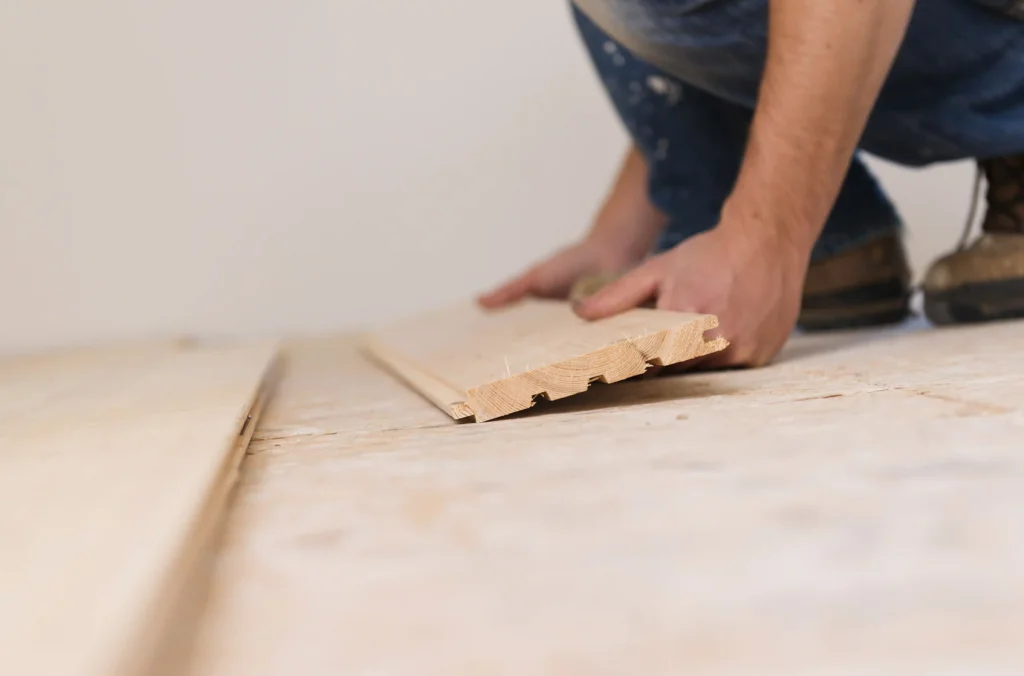
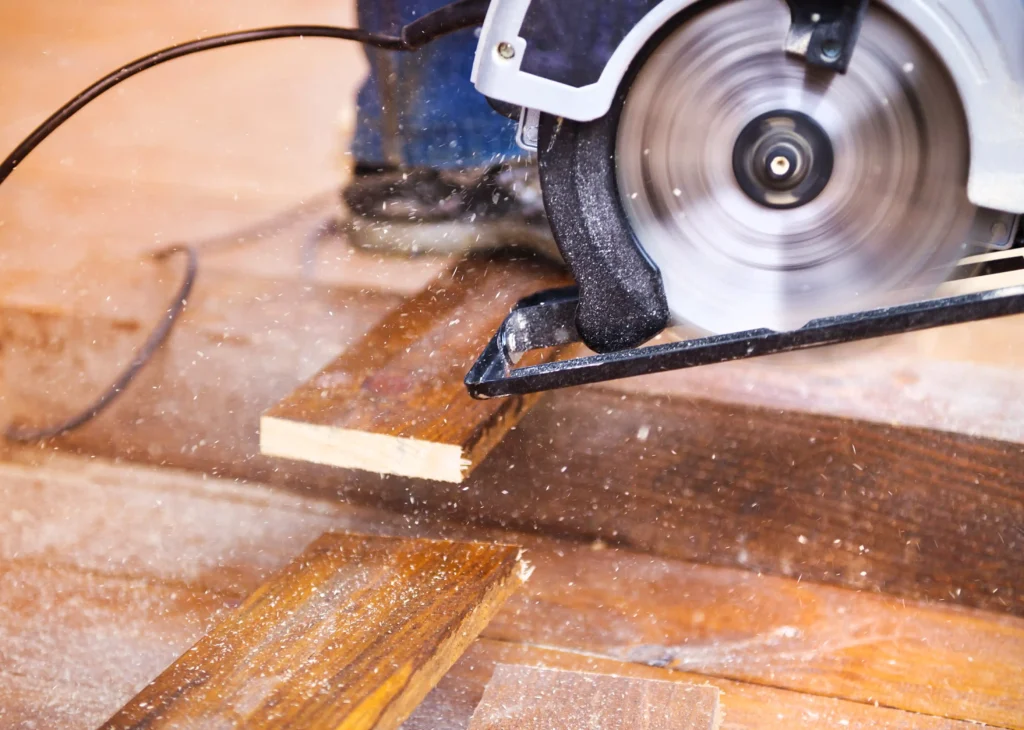
Second, strand-woven bamboo’s extreme hardness creates a practical installation trade-off. Flooring that scores above 3,500 lbf requires carbide-tipped saw blades, pre-drilling for nail-down installation, and slower cutting speeds. Installers experienced with domestic hardwood frequently underestimate the tooling demands of strand-woven bamboo, leading to blade damage, cracked planks at fastener points, and split end cuts. The hardness that protects the floor in use complicates the process of getting it there.
Third, Janka hardness does not prevent surface scratching from sharp, small-contact-area objects. A high heel exerts approximately 1,500 psi at the tip. A small piece of grit trapped under a shoe sole concentrates similar pressures over sub-millimeter contact areas. Strand-woven bamboo resists the large-area, moderate-force indentation the Janka test simulates, but fine scratches from abrasive particles remain possible on any bamboo product regardless of substrate hardness.
Which Bamboo Hardness Level Suits Which Application
Natural horizontal or vertical bamboo at 1,300 to 1,400 lbf performs adequately in bedrooms, formal living rooms, and low-to-moderate traffic areas. These rooms experience infrequent heavy furniture movement, low abrasive grit load from outdoor foot traffic, and no concentrated point loads from commercial equipment. The hardness advantage over red oak is sufficient for these conditions, and the lower price per square foot of laminated plank bamboo relative to strand-woven makes this tier cost-efficient for appropriate applications.
Carbonized bamboo at 1,000 to 1,100 lbf should be limited to bedrooms and minimal-traffic spaces. Installing carbonized bamboo in hallways, kitchens, or near exterior entry points places the material in conditions that exceed its dent resistance threshold. This is not a manufacturing defect — it is a predictable consequence of selecting material by color rather than hardness for the intended use case.
Strand-woven bamboo at 3,000 lbf and above suits hallways, kitchens, open-plan living areas with direct exterior access, and homes with dogs above 30 pounds. The hardness advantage over laminated plank bamboo is not marginal in these contexts — the difference between 1,380 lbf and 3,500 lbf represents a material that is more than twice as resistant to the same indentation force. For households with large dogs, the case for strand-woven specifically is strong; the scratch and dent profile of natural and carbonized bamboo under repeated dog-claw traffic is closer to soft hardwood than the marketing context of “bamboo flooring” typically implies.
The specific performance of strand-woven bamboo against pet-related surface damage is examined in whether strand-woven bamboo holds up under pet traffic.
Reading Manufacturer Janka Claims Accurately
Bamboo flooring Janka claims require source-checking because testing methodology, test location, and moisture conditions at time of testing all affect the score. A manufacturer reporting a Janka score of 5,000 lbf for a strand-woven product may have tested at node locations, at below-standard moisture content, or using a modified protocol that differs from ASTM D1037. The same product tested under standard conditions may score 3,500 to 4,000 lbf.
Third-party certification provides the most reliable hardness data. FloorScore and GREENGUARD certifications test VOC emissions, not hardness, but manufacturers that invest in third-party VOC certification typically also commission independent physical performance testing. Requesting the actual test report rather than the marketed rating number reveals the testing standard used, the moisture content of the sample, and the location on the plank where testing was performed.
Comparing Janka scores between bamboo products is most meaningful when both scores come from the same testing standard and similar moisture conditions. A score of 3,200 lbf from one manufacturer and 4,500 lbf from another does not necessarily mean the second product is 40 percent harder in practice — it may mean the second manufacturer used more favorable test conditions. The floor’s grade, compression specification, and resin quality are better long-term durability indicators than a single Janka number used in isolation. Those quality factors are covered in what bamboo flooring grades actually indicate about product quality.
The Relationship Between Bamboo Hardness and Long-Term Durability
Hardness and durability are correlated but not equivalent. A high Janka score means the floor resists denting under point loads, which translates to preserved surface appearance under furniture, foot traffic, and dropped objects. It does not mean the floor will not expand in high humidity, will not scratch under sharp contact, will not delaminate if water penetrates the joints, or will last a defined number of years regardless of maintenance quality.
Strand-woven bamboo’s combination of high hardness and compressed fiber density does produce measurably better long-term wear resistance than laminated plank bamboo in equivalent traffic conditions. Studies of commercial installations show strand-woven products maintain surface integrity longer than natural horizontal bamboo under the same foot traffic volume. This durability advantage compounds over time in high-traffic applications and justifies the higher upfront cost per square foot for those applications.
The full picture of how bamboo holds up across its lifespan — including how hardness interacts with installation method, finish maintenance, and humidity control — is addressed in how durable bamboo flooring is across different conditions.
The hardness rating tells you what type of abuse a bamboo floor can absorb on a given day. What it cannot tell you is how the floor was installed, whether the subfloor was properly prepared, whether the product acclimated before installation, or whether the finish will hold under cleaning chemical exposure over years of use. Hardness is the right starting point for selecting bamboo flooring by product type — but it is the beginning of the evaluation, not the conclusion.